
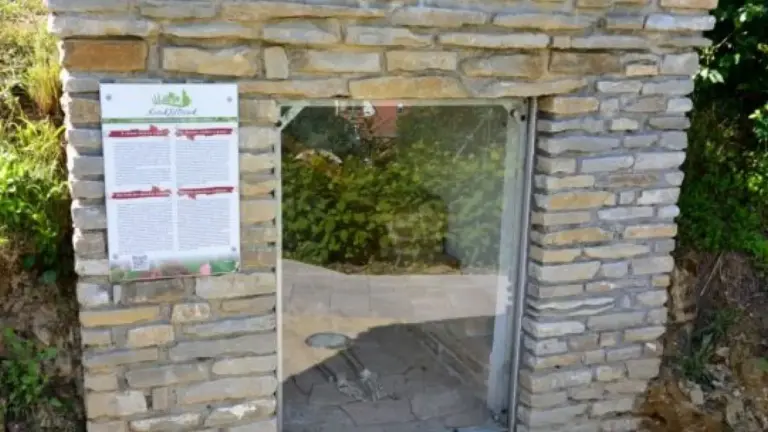
Roman soldier's grave
The grave of the Roman soldier, also known as the late Roman brick grave, is located in the Egregy district of Hévíz. The grave was made of brick, using quicklime.
It was found during earthworks in 1925, completely intact. The finds from the grave date from the time of the Roman emperor Constantine II. A bronze belt buckle, a garment clasp, an iron knife, the emperor's coin and, of course, the skeleton of a Roman soldier were found. The finds were placed in the Balaton Museum in Keszthely, while the skeleton remained in its place.
A few hundred metres from the grave, to the east, near the Villa Rustica excavated between 2001 and 2004, the remains of an early imperial-era Roman villa were also uncovered in 1931. The house was built at the end of the 1st century. Based on the finds, it was probably a richly decorated building, and it was still in use in the 4th century. While digging in the courtyard of one of the houses on Egregyi utca, a brick-firing kiln was found.
The finds discovered in the area testify that those who lived here led prosperous lives. This is shown by the fact that on the road leading towards the Árpád-era church, 276 Roman coins from the 4th century were found in a clay vessel.